Years ago I was knee-deep in my Sacred Parks Project in Chicago, doing my best to invite folks in “Chicagoland” to see their walks in the parks (especially their amazing Forest Preserve system) as something more: a way that God may be fine-tuning their walk of leisure into a walk of faith and stewardship. Those were days of wonder and work, wander and play. But most importantly perhaps, they were days of confronting the fear of the unknown: What was next in our lives? Career changes? Relationship transitions? Spiritual (un)rest? The list went on and on…
Somewhere in that journey was a walk in 2010 with SP Naturalist Jessica D., as we were scouting out locales for our upcoming 2011 “Hiking by Faith” Sacred Parks nature walk series…appropriately titled, you might say. The afternoon was a cold December one, as we traversed a wide-open forest preserve in the Western suburbs. The snow cover was minimal, maybe 4-6 inches of powder. Easily done with a decent pair of boots.
But somewhere in the middle of these prairie lands was a stretch where drifts had exposed patches of “raw earth” and prairie grass, peppered with several pockets of thin iced-over puddles. For me, these were hardly obstacles. I laughed with reverential delight as the weight of my steps splintered the shallow frozen pools under my feet, causing an almost musical series of pops and cracks. When I stopped walking for a moment, and heard nothing but silence, I turned. Jessica was behind me by 30 feet, walking gingerly, and certainly not following my route.
Now, this isn’t the moment when I tell you that I was actually walking on precariously thin ice (although I’m sure that has probably happened before, to be fair!) No, if I would have “fallen through” this solid water, I would have met solid Illinois turf about an inch below…But I had also not just spent the last 4 months at Yellowstone National Park as an interpretive ranger (like Jessica had). And in Yellowstone, if you’re walking on “solid” earth in the middle of summer and you hear big “crack” beneath your feet, there is a good chance you’re in more than a pickle; you are likely beginning your descent into a life-changing boiling-hot pool of geothermal water beneath the surface in a region in North America (northwest Wyoming) known by scientists to house an upside-down “super volcano” underneath much of its vast territory. That “caldera” region is known as…well…Yellowstone National Park.
Context matters, geography matters, and so does one’s fear – and relationship with it. For those of you reading this blog who might be Christian (and perhaps even those who may not), you may remember that the words Old Testament prophets and Jesus alike often said to their believers were these: “Don’t be afraid.”
Like a cold wind, fear changes our responses. Fear colors our judgement, and sometime even gets in the way of our more natural responses to situations that either threaten us or hold opportunity for survival and thrival. In his book Survival: How to Prevail in Hostile Environments, author and outdoor “survivalist” (my words) Xavier Maniguet begins his book with “Major Threats” – first of which is The Cold. That’s right, just cold. For example, in 1914-1918, during World War I, the French army suffered 120,000 deaths and the Italian army roughly 300,000 deaths – all due to the cold.
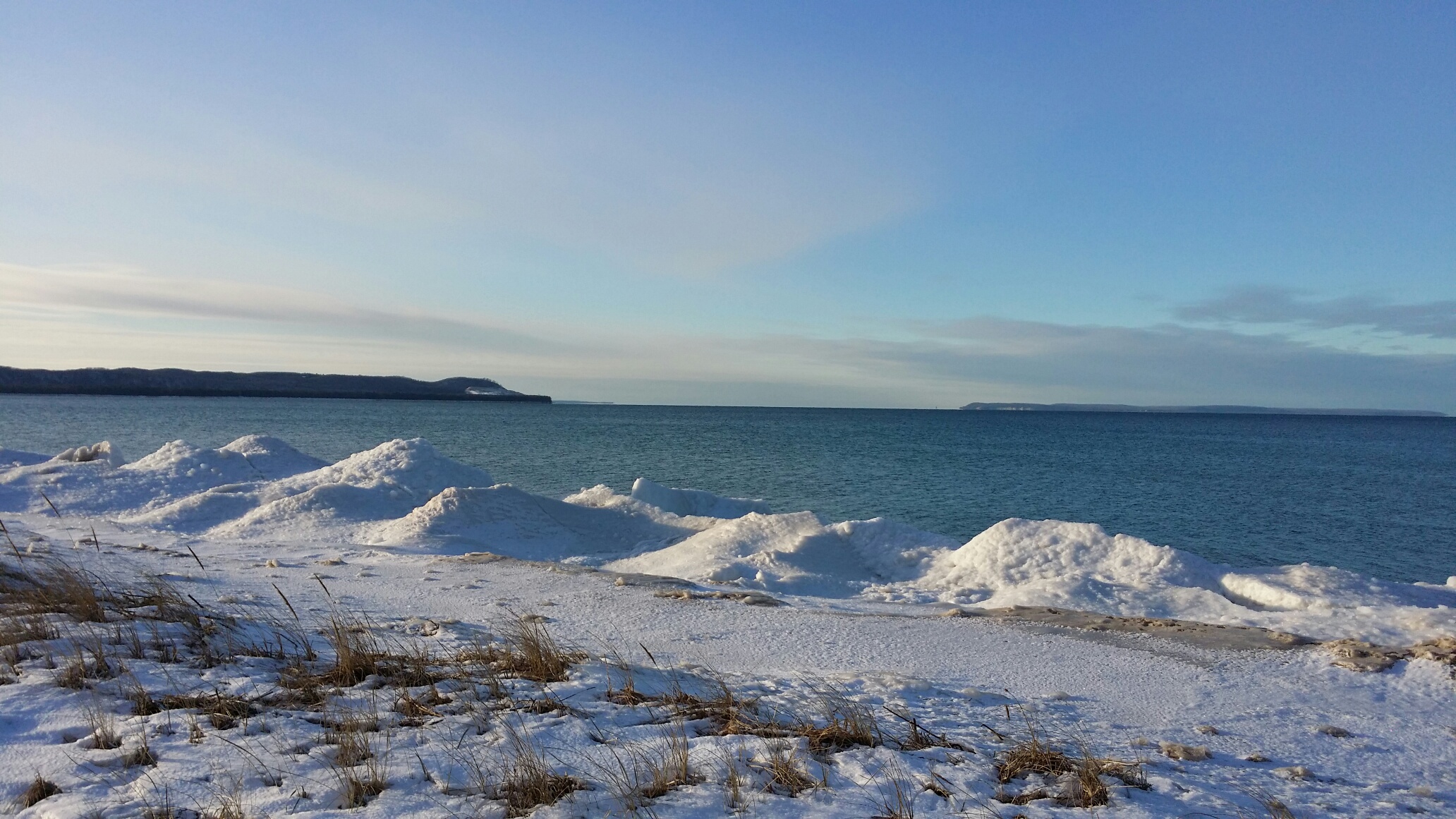
Maniguet tells several “True Tales of Survival” – a man who miraculously survived a frozen flight in an airplane landing gear compartment, a four-year-old emerging from a fall into a frozen Lake Michigan (under the ice for 20 minutes), and Japanese “Amas” pearl divers entering 46.4 Farenheit waters all-day. The first two situations occurred because the two individuals literally did not know the immense danger they were experiencing, so their bodies went into a primitive quasi-hibernation state (which, I should add, required very precise warming procedures by trained medical personnel.) The third instance involves divers who have actually trained their minds and bodies to adjust to their fears and temperatures most divers could not withstand. Maniguet writes that “all these instances of survival have one thing in common: the absence of a phase of struggle, despite the extreme temperature, when the individual is first exposed to the cold.” And they also demonstrate the need to know the true threat of the cold, and how to adjust to it.
Now, I’m not advocating naive or daredevil moves to brave icy cold temps in superhuman fashion (Bundle up, please!). But there is something to be said for knowing how to prepare for, and respond to, the people and threats we experience in our coldest moments…(Echo: “Be not afraid…”) This is what keeps me reading, listening, and open for training and warming up by the Spirit.
How do you respond to the “cold,” my friends? What is the ice telling you…?
 trailversecity
I respond to cold by bundling up, or turning up the thermostat at home, or by piling on the blankets in bed. Many of us are lucky to have the ability to do these things in order to stay warm and comfortable. On a recent hike, however, when I didn’t have the ability to whip out an extra hat or gloves, I discovered that the cold does invoke fear in me. As my partner and I were led off-trail due to downed trail-posts, the fear of the unknown and the cold rose up in me nearly instantly. Fear can be paralyzing…much like being plunged into icy cold water.
Paul, I especially appreciated your article on cold as the local forecast has us not getting over 0° today. I’ve challenged myself to some Lenten disciplines that will no doubt have moments of feeling I am on thin ice. I’ll try on the gospel injunction you recommend “be not afraid”, and see what Creator Yahweh has to show.